
Why “pay yourself first” works
Most people save whatever remains at month-end, but spending usually expands to fill the whole salary, so nothing remains. When savings are set aside at the start and the rest covers spending, actual saving becomes more assured, and adapting to the remainder happens faster. The idea is simple: a percentage gets set and reserved first, and the rest covers expenses.
A worked example on a 10,000 SAR salary
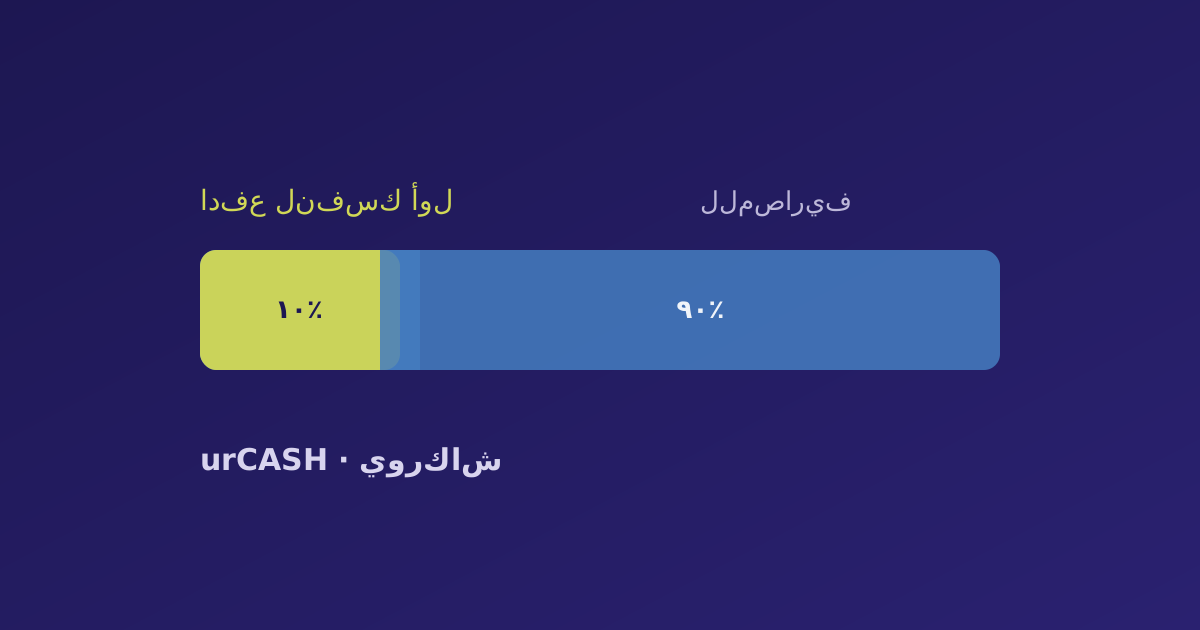
Let us work it on a 10,000 SAR salary. This is just an illustrative example, and everyone adjusts the percentages to their situation and commitments:
- 10 percent savings: 1,000 SAR set aside the moment the salary lands.
- Left for spending: 9,000 SAR for rent, bills, food, and the rest of your life.
- Over time: 1,000 SAR a month becomes 12,000 SAR a year, almost without noticing.
If 10 percent is too much to start with, 5 percent (500 SAR) is a common starting point, growing gradually over time. What matters is starting, even with a small amount.
What this looks like in practice
Many people who try this pick a percentage, 5 or 10 percent for example, or a fixed amount that feels comfortable. The moment the salary lands, they move that amount into a place separate from their daily current account, and live on the rest for the month. After a few months, some raise the percentage if it feels easy, and others step it back if it feels tight.
Where urCASH fits in
urCASH brings your accounts into one place, with your permission, through Saudi Open Banking, so you see clearly how much came in, how much you spent, and how much you set aside. That clarity helps you track your savings commitment month by month. We do not hold or move your money. We show the picture, and the decision is yours.